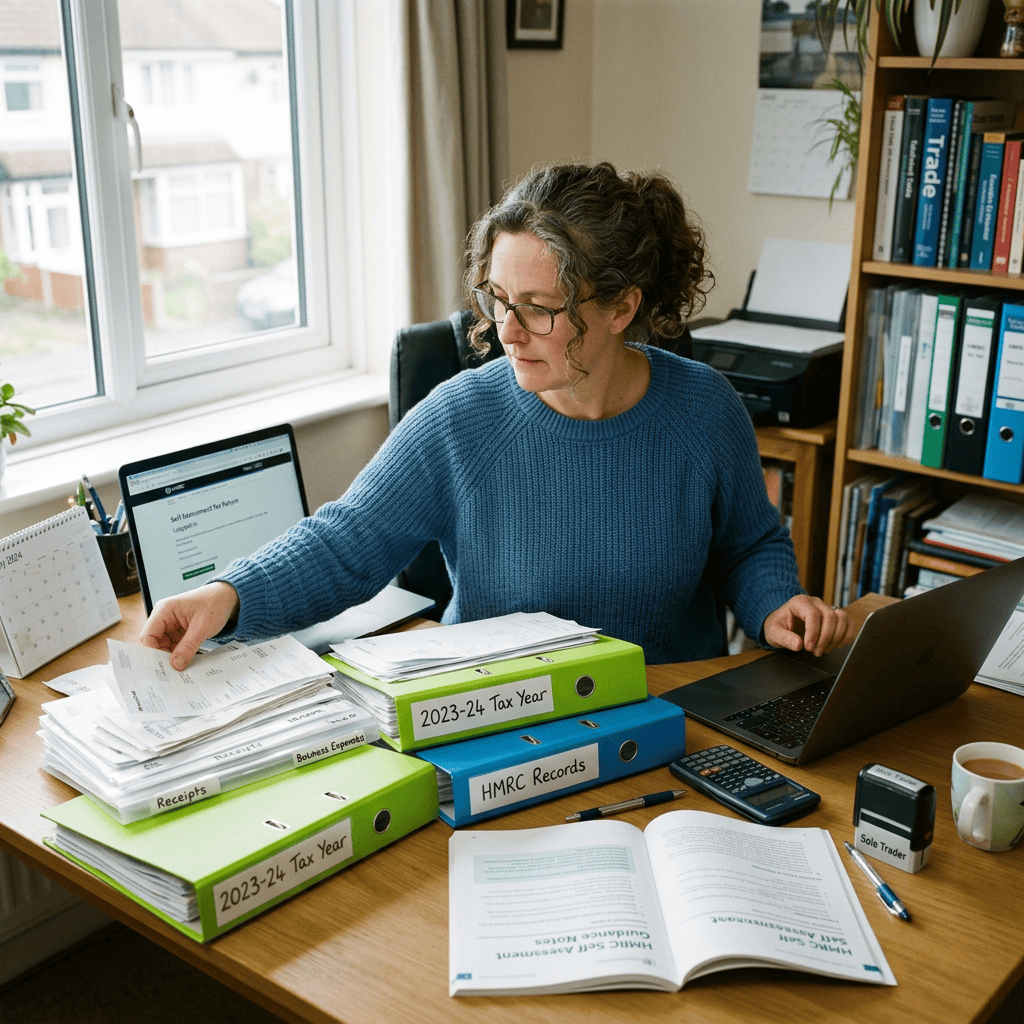
Warning for Sole Traders, Freelancers and Side-Hustle Businesses
If you’ve been treating bookkeeping as something you’ll sort out in January. Then 2026 may be the year that catches up with you.
HMRC has made it very clear that closing the UK’s tax gap is one of its biggest priorities. It has invested heavily in new compliance officers, better technology and more digital reporting requirements to identify taxpayers who are not declaring the correct income.
For sole traders, freelancers, landlords and those earning extra income online, the spotlight has never been brighter.
Why Is HMRC Suddenly So Interested?
HMRC estimates that billions of pounds of tax go unpaid each year and a significant proportion comes from small businesses, self-employed individuals and landlords. HMRC’s compliance teams are now under pressure to recover more of this missing tax revenue.
To support this, HMRC has:
- Recruited thousands of additional compliance officers.
- Expanded the use of artificial intelligence and data analytics.
- Increased data sharing with banks, digital platforms and third parties.
- Introduced Making Tax Digital for Income Tax.
- Increased penalties for non-compliance in several areas.
The days of HMRC relying solely on random investigations are largely gone.
HMRC Knows More Than You Think
Many sole traders still believe that if they don’t tell HMRC about income, HMRC won’t know about it.
That assumption is becoming increasingly dangerous.
HMRC’s Connect system can compare information from multiple sources including:
- Bank accounts
- Property records
- Land Registry
- Letting agents
- Online selling platforms
- Digital marketplaces
- Previous tax returns
- Companies House records
This allows HMRC to identify mismatches and unusual activity automatically.
If the information doesn’t add up, your tax return can be flagged for review.
Who Is HMRC Looking At Right Now?
1. Landlords
Landlords are currently one of HMRC’s biggest areas of focus.
HMRC is using property ownership data, tenancy information and platform reporting to identify rental income that may not have been declared. Large numbers of “nudge letters” have been issued during 2026 encouraging landlords to review their tax affairs.
Even accidental landlords are being targeted.
This includes people who:
- Inherited a property.
- Rent out a former home.
- Let a room occasionally.
- Use Airbnb or short-term letting sites.
2. Side Hustles and Online Income
Selling products online is no longer hidden from HMRC.
Platforms such as eBay, Etsy, Vinted, Airbnb and similar marketplaces now provide information that can be used by HMRC to identify undeclared income.
If you’re making money from:
- Online selling
- Content creation
- Freelancing
- Digital services
- Property letting
you need to ensure the income is being reported correctly.
3. Self-Employed Individuals Under MTD
Making Tax Digital for Income Tax started on 6 April 2026 for many sole traders and landlords earning over £50,000. HMRC sees digital records and quarterly reporting as a key weapon in reducing errors and increasing compliance.
Businesses that continue using poor record-keeping systems may find themselves attracting unwanted attention.
What Is a HMRC “Nudge Letter”?
Many people panic when an HMRC letter arrives.
A nudge letter is not a formal investigation.
It is HMRC saying:
“We have information that suggests something may be wrong. Please review your tax position.”
These letters are increasingly being sent to:
- Landlords
- Online sellers
- Crypto investors
- Taxpayers with overseas income
- Individuals with undeclared side income
Ignoring the letter is usually the worst thing you can do.
Many investigations begin with a nudge letter that was never answered.
Common Mistakes That Trigger Compliance Checks
The biggest issues we see include:
- Missing income.
- Personal expenses claimed as business costs.
- Cash sales not recorded.
- Undeclared rental income.
- Poor bookkeeping records.
- Incorrect mileage claims.
- Failure to register for Self Assessment.
- Late submissions.
Most investigations begin because something doesn’t look right compared with data HMRC already holds.
What Happens If HMRC Finds a Problem?
Depending on the circumstances HMRC may:
- Ask questions.
- Request records.
- Open a compliance check.
- Charge interest.
- Apply penalties.
- Recover unpaid tax going back several years.
In cases involving deliberate behaviour, HMRC can look back much further than normal.
How Can Sole Traders Protect Themselves?
The answer is surprisingly simple:
✅ Keep complete records.
✅ Use bookkeeping software.
✅ Reconcile your bank account regularly.
✅ Declare all income.
✅ Keep evidence for expenses.
✅ Don’t ignore HMRC letters.
✅ Ask for professional advice before problems escalate.
AIM GB LTDs Warning
HMRC is no longer relying on luck.
It is using technology, data matching and thousands of additional compliance staff to identify errors and undeclared income.
If you’re a sole trader, freelancer or landlord, now is the time to get your records in order.
The cost of proper bookkeeping is almost always far lower than the cost of an HMRC compliance check.
Need help getting MTD ready or worried about a HMRC letter? AIM GB LTD can help you get your records organised before HMRC comes knocking.

Leave a Reply